Review of the finds from the Turmhölzle excavation
In 1981, the eastern section of the castle, including the keep, was excavated by groups of students under the guidance of archaeologists, at the initiative of the town of Schopfheim.
The finds from this excavation are on display at the Zentrale Fundarchiv in Rastatt, which is part of the Baden-Württemberg State Museum of Archaeology.
On May 8, 2026,Dominik Baiker and Dr. Wolfgang Richter have reviewed the finds. This review provided an initial overview of the finds—it does not yet constitute a scientific analysis. The scientific analysis and documentation of the finds remain tasks for the future. Nevertheless, the review yielded important findings:
Ceramic artifacts
The ceramic finds confirm the chronological assessment of the Turmhölzle site: construction of the castle began around 1100, and the castle was abandoned no later than 1200.
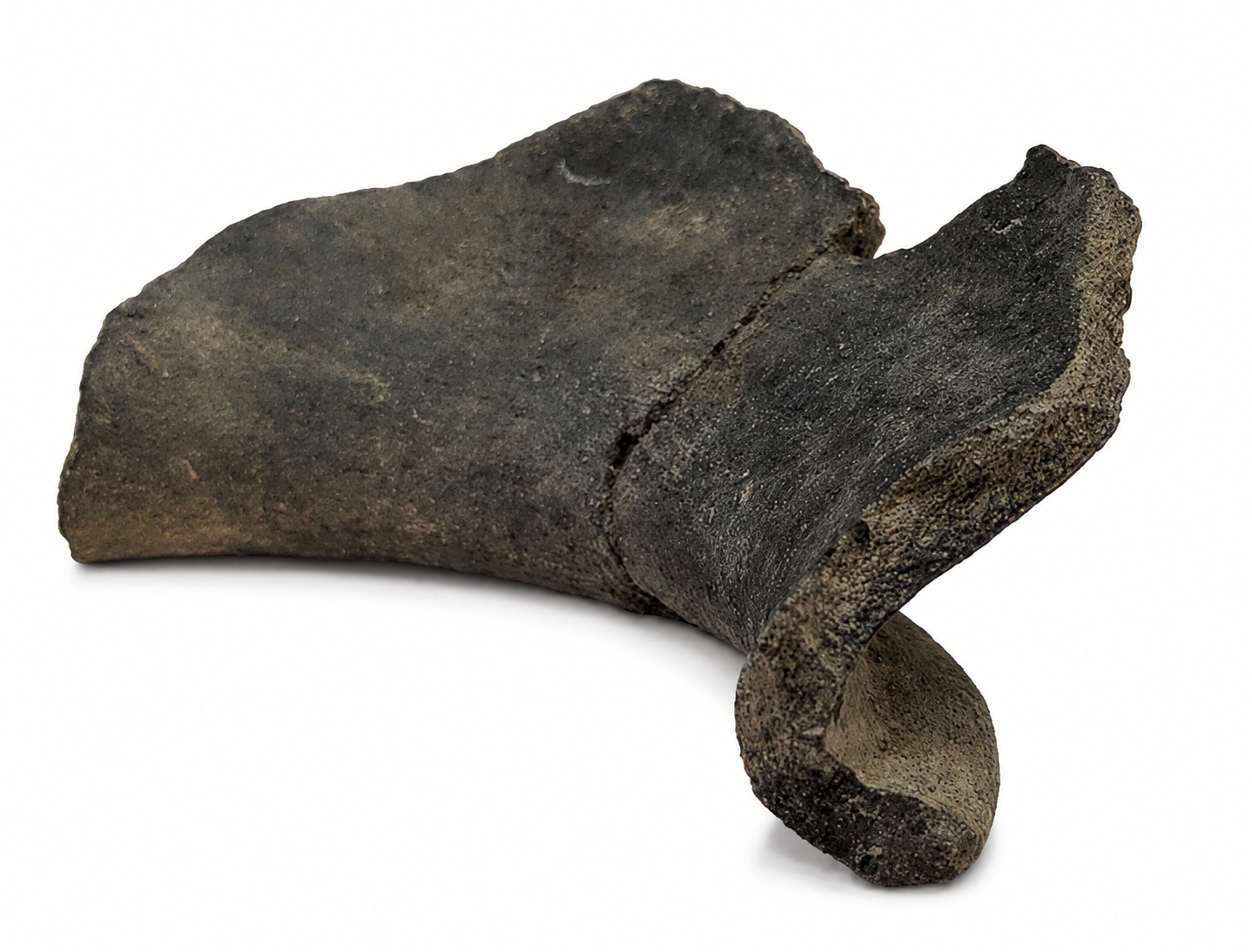 Pot rim shard, clay, width: ~12 cm, height: ~5 cm; Image: Archäologisches Landesmuseum Baden-Württemberg Photo: Wolfgang Richter
Among the finds is a considerable number of pot rim shards. The shape of the rims allows for an estimation of their age. The majority of the pot rims found date from the 12th century. A few pieces date to the period shortly after 1200. Some rim shards may also date from the second half of the 11th century, though this requires further investigation.
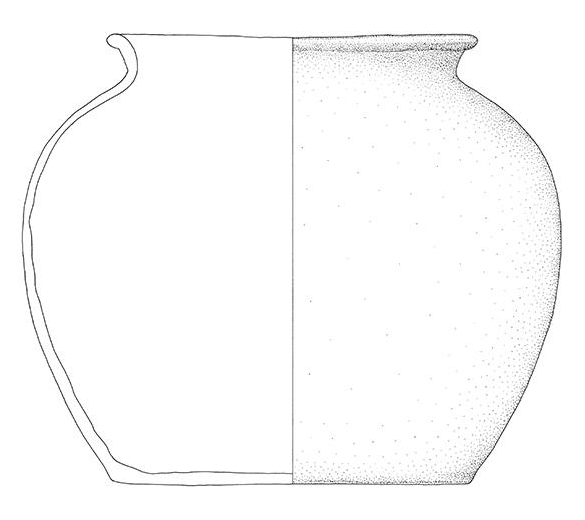 ©Archäologie Baselland, Drawing: Gilgia Schneider
Drawing of a reconstructed similar cooking pot from the Altenberg ruins in the canton of Baselland (height approx. 22 cm).
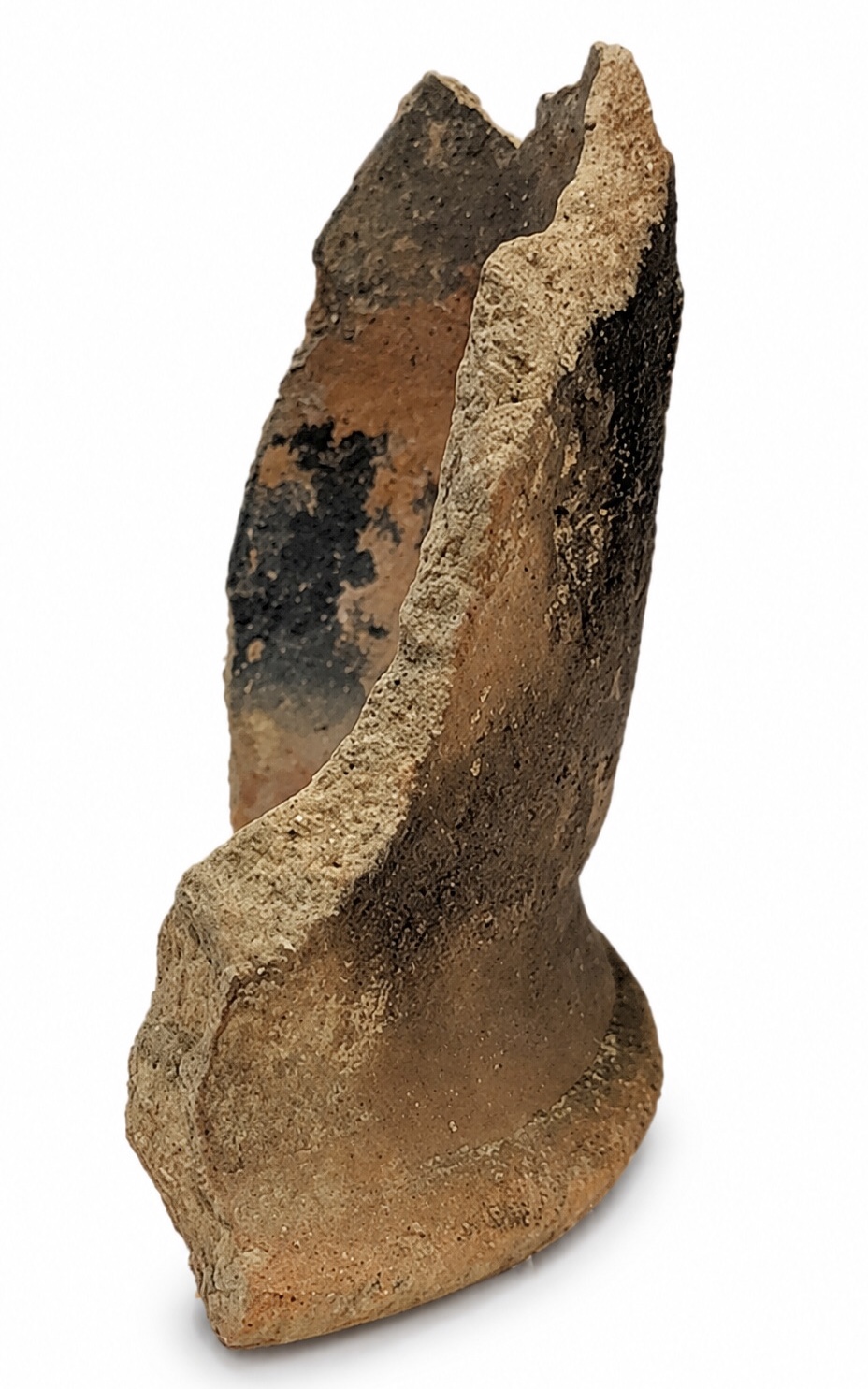 Fragment from a stove tile, clay, width: ~10 cm, height: ~7 cm. Image: Archäologisches Landesmuseum Baden-Württemberg Photo: Wolfgang Richter
The Turmhölzle was already heated with a tiled stove. Among the ceramic finds are the remains of a so-called “pot tile.” This type of tile is the oldest known form of stove tile. In castles in northwestern Switzerland, this type of stove tile can be found from the second half of the 11th century until around 1100. The use of tiled stoves represented a significant advancement in room heating compared to open fires in fireplaces. The residents of Turmhölzle utilized this advanced heating method.
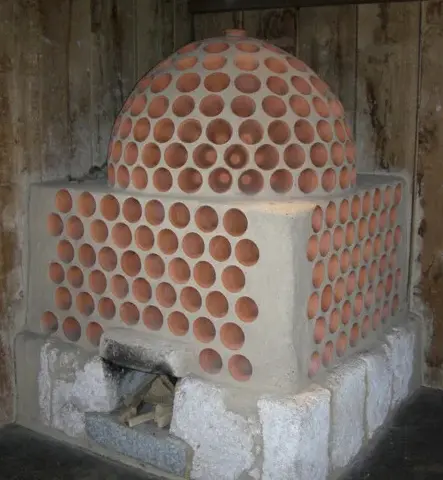 Photo: Dumitrache, Marianne: Heizanlagen im Bürgerhaus. In: Flüeler Marianne und Niklaus (Hrsg.): Stadtluft, Hirsebrei und Bettelmönch, die Stadt um 1300. Stuttgart 1992, S. 280 -287.)
Reconstruction of a muzzle-loading tiled stove at Bachritterburg Castle in Kanzach, Biberach District.
Surface finds
A surface find is an archaeological artifact discovered by chance on the surface without any targeted excavations having taken place.
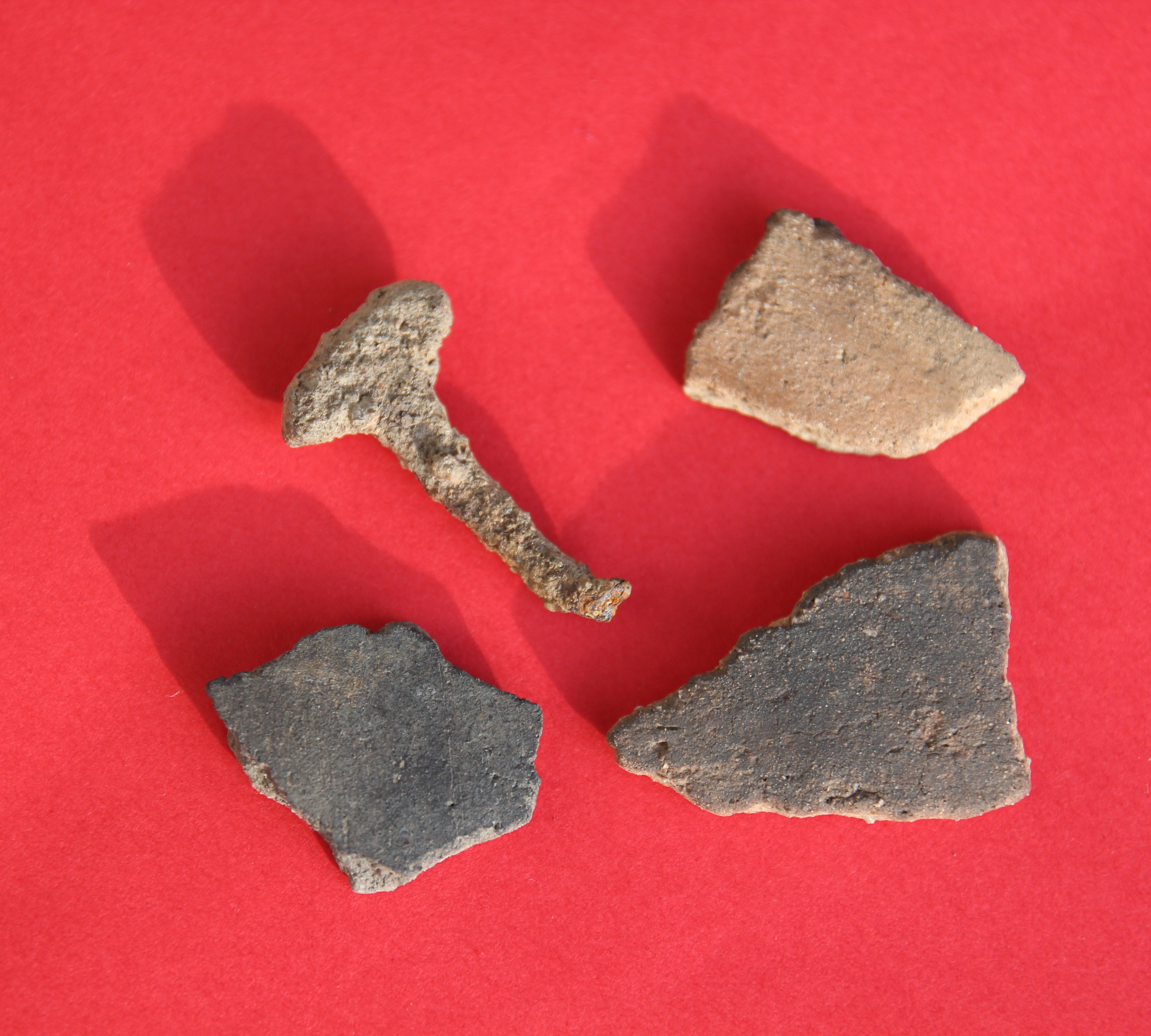 Surface find from the Turmhölzle ruins. Photo: Wolfgang Richter
The surface finds shown above are a wrought-iron horseshoe nail (length: 3.2 cm) and three shards of medieval pots. The two lower shards are from the same pot, but they do not fit together. The design of the horseshoe corresponds to a type of horseshoe that was common from around 1000 to 1250.



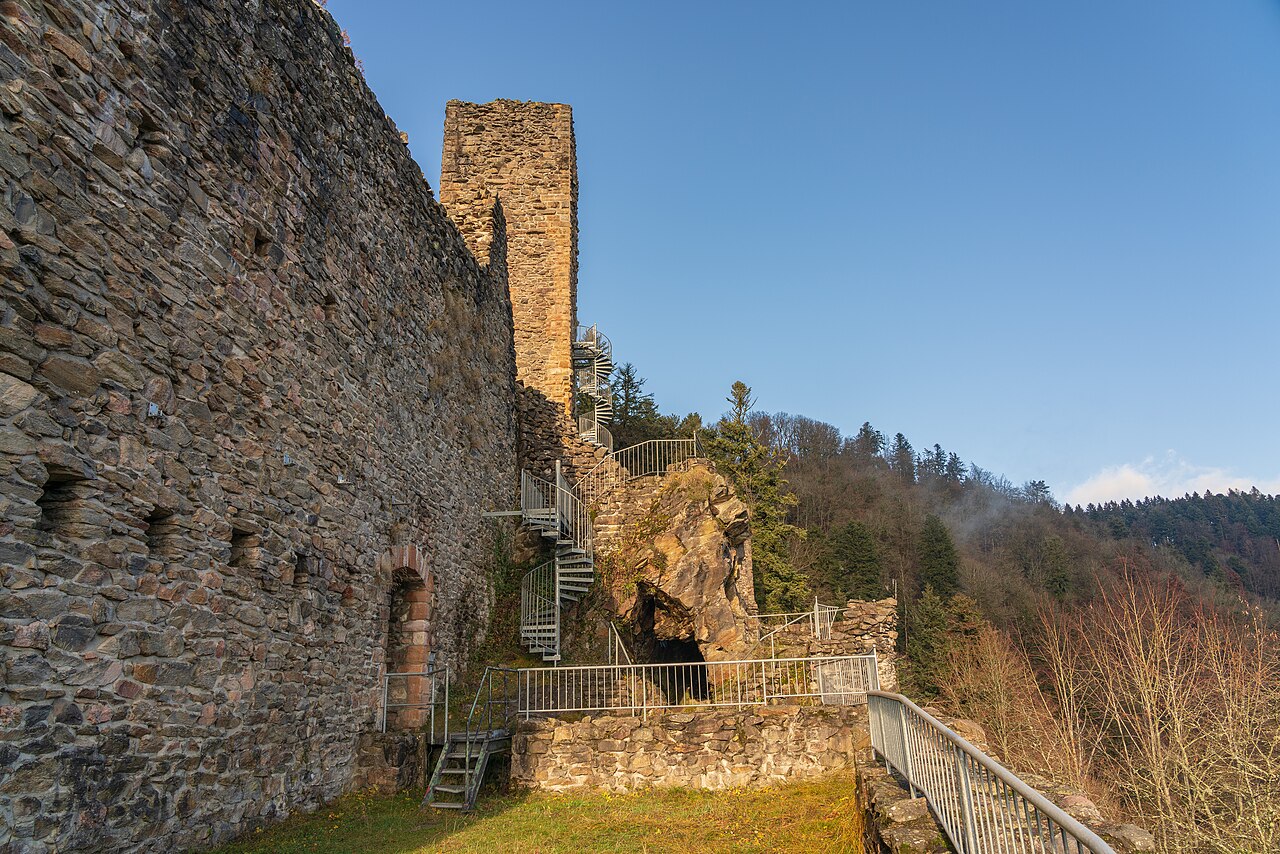
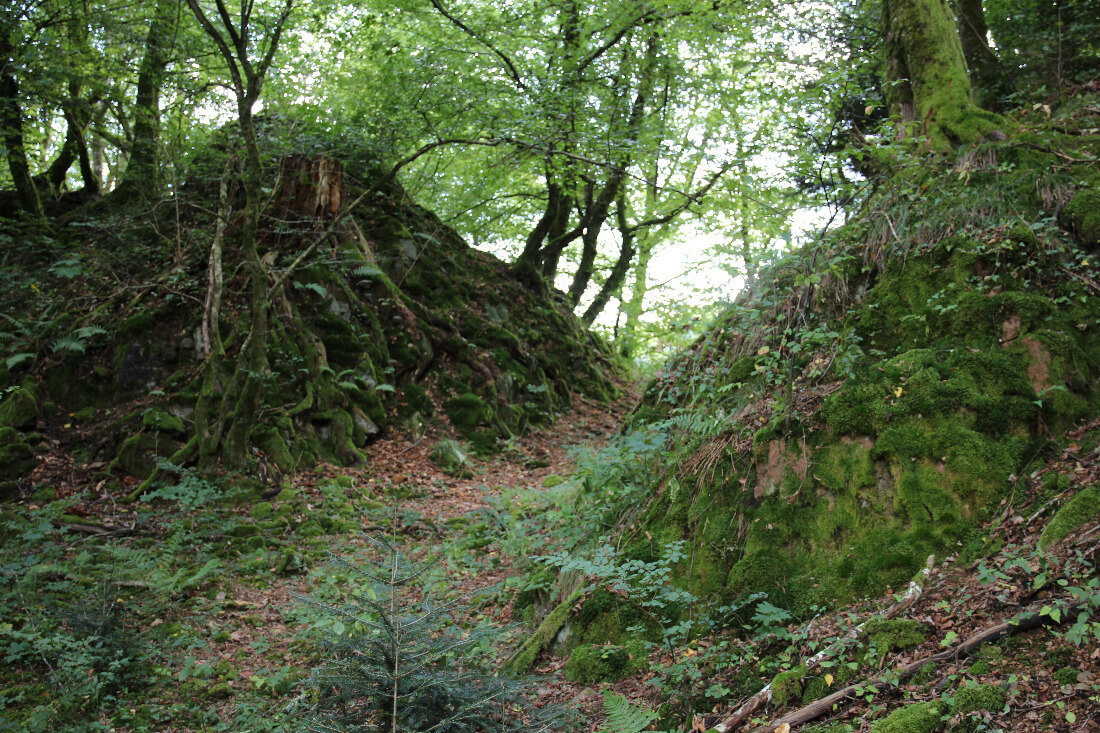 The moat of Neu-Waldeck Castle on a rocky spur above Tegernau in the small Wiesental valley.
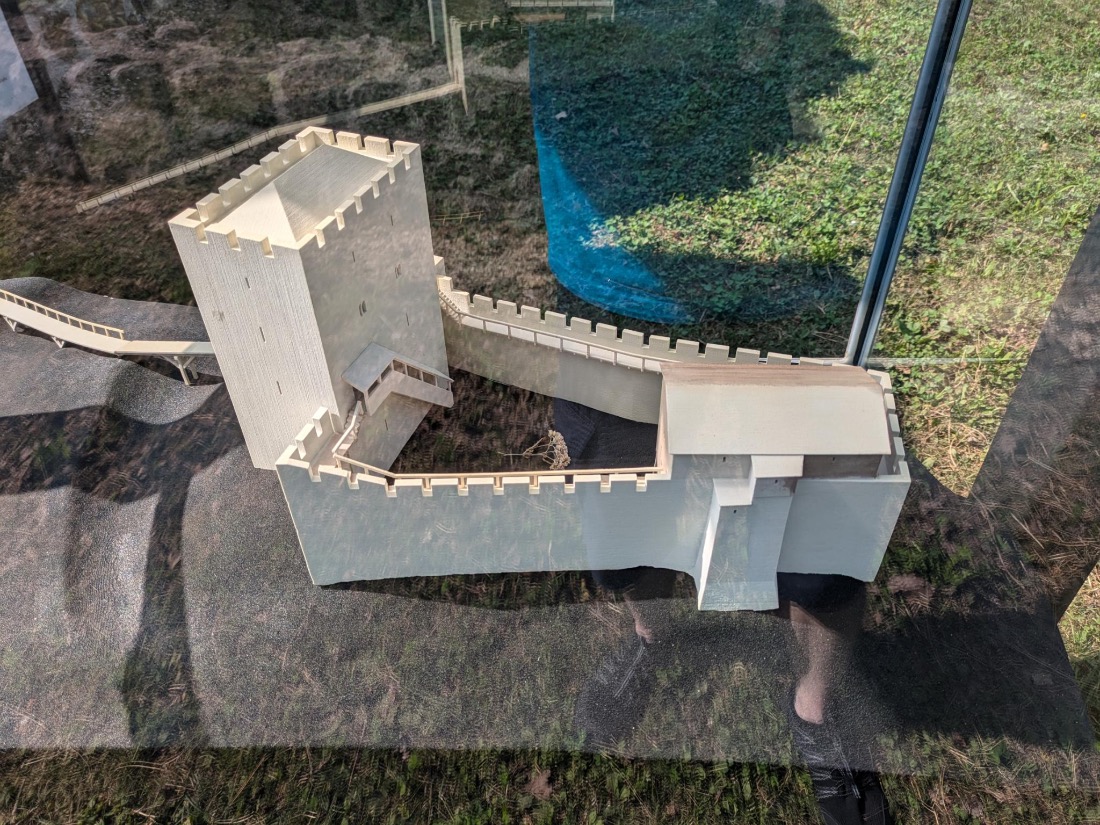 Display case with reconstruction attempt on the Altenberg ruins,
 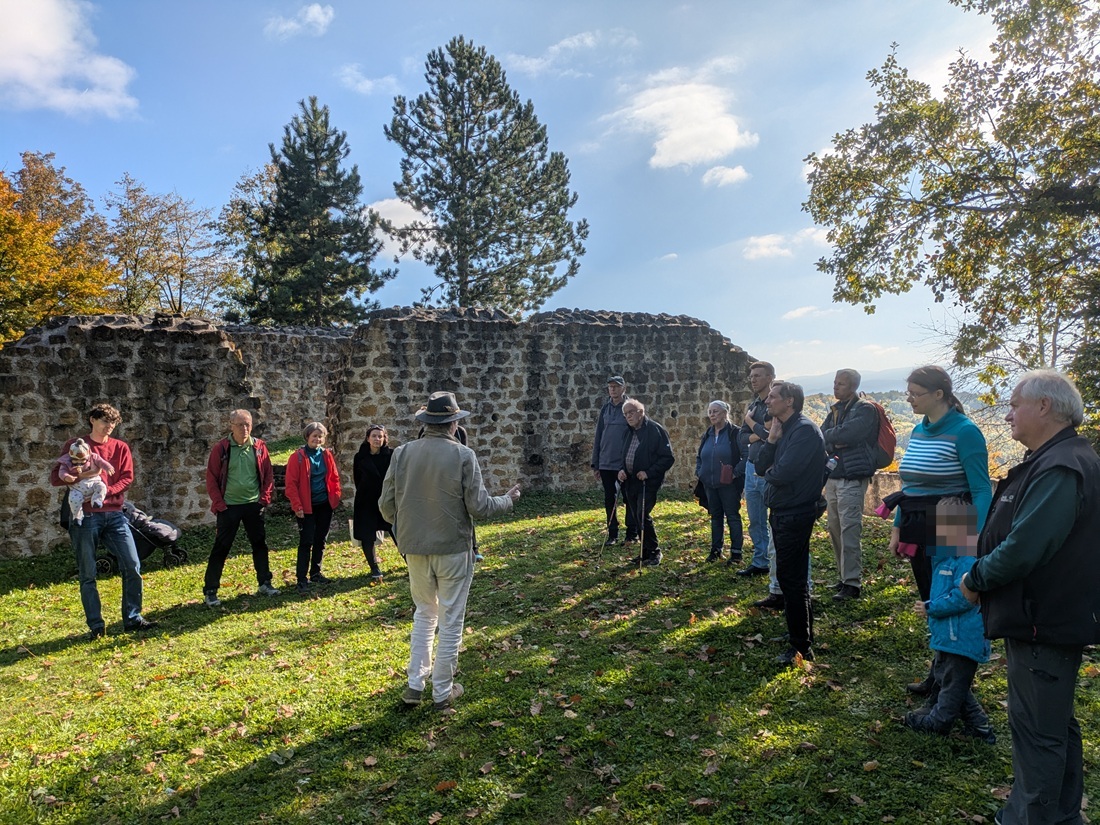 Group of visitors with cantonal archaeologist R. Marti on October 11, 2025, at the Altenberg ruins/CH,
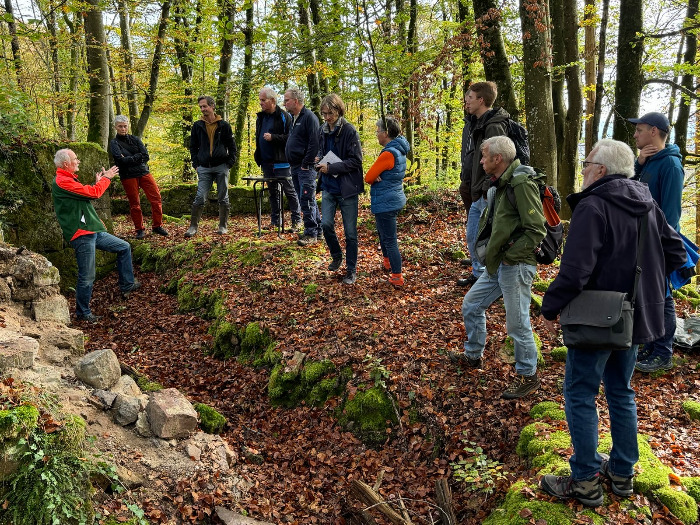 Club members on the castle plateau.
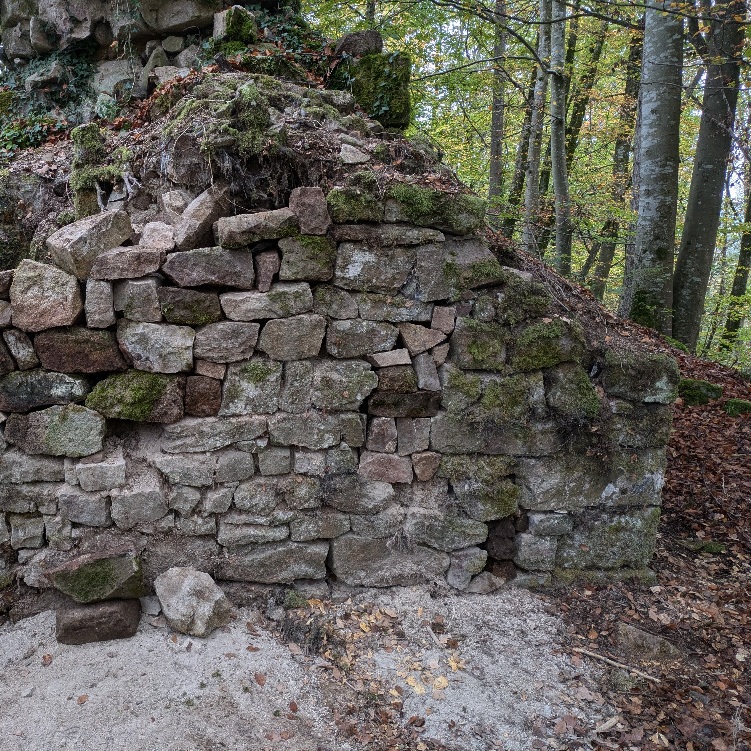
 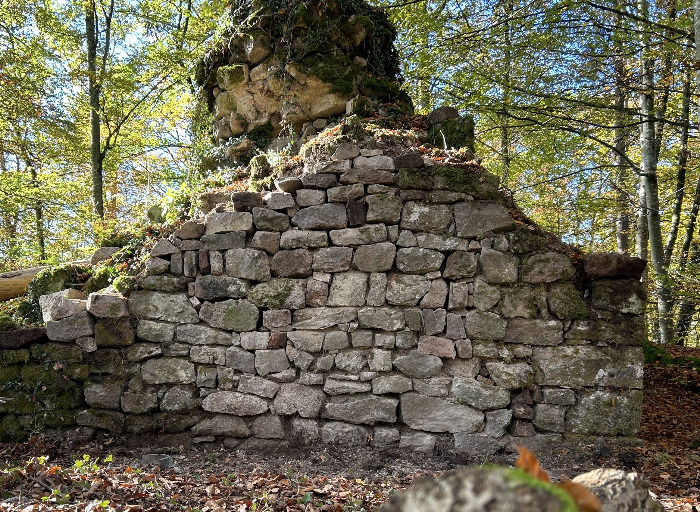 The reconstructed wall. Moss and algae have disappeared from this part of the wall, as it had been covered with a tarpaulin since fall 2023.
 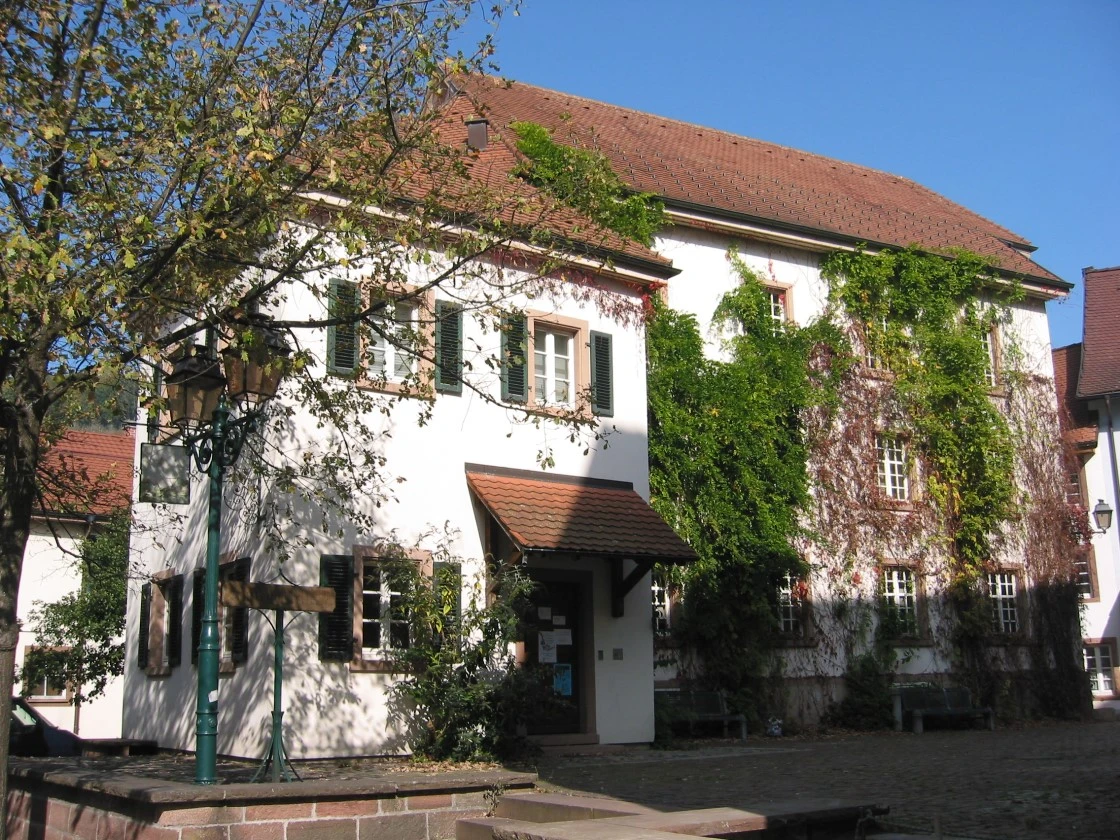 Entrance to the city museum, Wallstraße,